
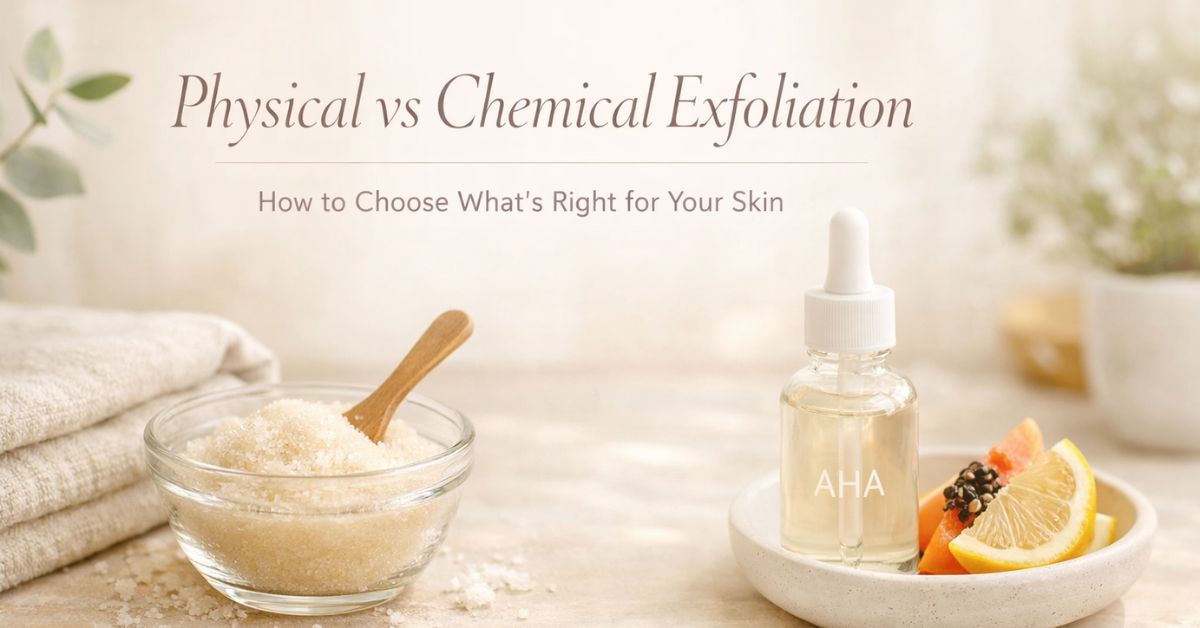
If you’ve ever stood in the skincare aisle (or browsed online) wondering whether a scrub or an acid serum is better for your skin, you’re not alone. The conversation around physical vs chemical exfoliation can feel confusing — especially when every product promises brighter, smoother, more youthful-looking skin.
Exfoliation is one of the most transformative steps in a skincare routine. When done properly, it reveals fresh skin, improves product absorption, softens fine lines, and restores glow. When done incorrectly, it can disrupt your barrier, increase sensitivity, and leave your skin inflamed.
If you’re unsure which type of exfoliation is best for your skin type, I’m breaking down the differences between physical and chemical exfoliation — and how to choose safely and confidently.
Let’s simplify it together.
Why Exfoliation Matters at Every Age
Our skin naturally sheds dead cells through a process called desquamation. When we’re young, this process happens quickly — roughly every 28 days. But as we move into our 30s, 40s, 50s, and beyond, cell turnover slows down significantly.
The result?
- Dullness
- Uneven texture
- Fine lines appearing more prominent
- Clogged pores
- Skincare products not absorbing as effectively
Exfoliation gently assists your skin’s natural renewal process. Think of it as clearing away what no longer serves you — so fresh, healthy skin can emerge.
However, the key word is gently.
Physical vs Chemical Exfoliation: What’s the Difference?
When comparing physical vs chemical exfoliation, the main difference is how dead skin cells are removed.
What Is Physical Exfoliation?
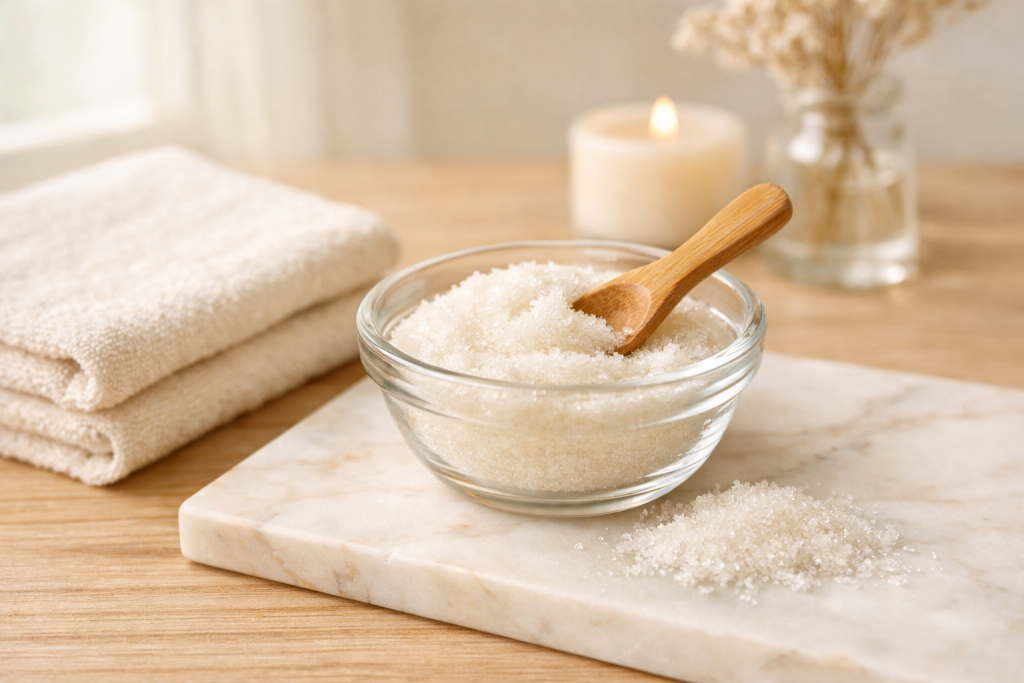
Physical exfoliation (also called mechanical exfoliation) uses a textured substance or tool to manually slough away dead skin cells.
Common examples include:
- Facial scrubs with fine particles (sugar, salt, jojoba beads)
- Exfoliating brushes
- Washcloths
- Microfiber cloths
- Dry brushing tools
The exfoliation happens through friction. You massage the product or tool across your skin, and the physical movement removes buildup.
What Is Chemical Exfoliation?
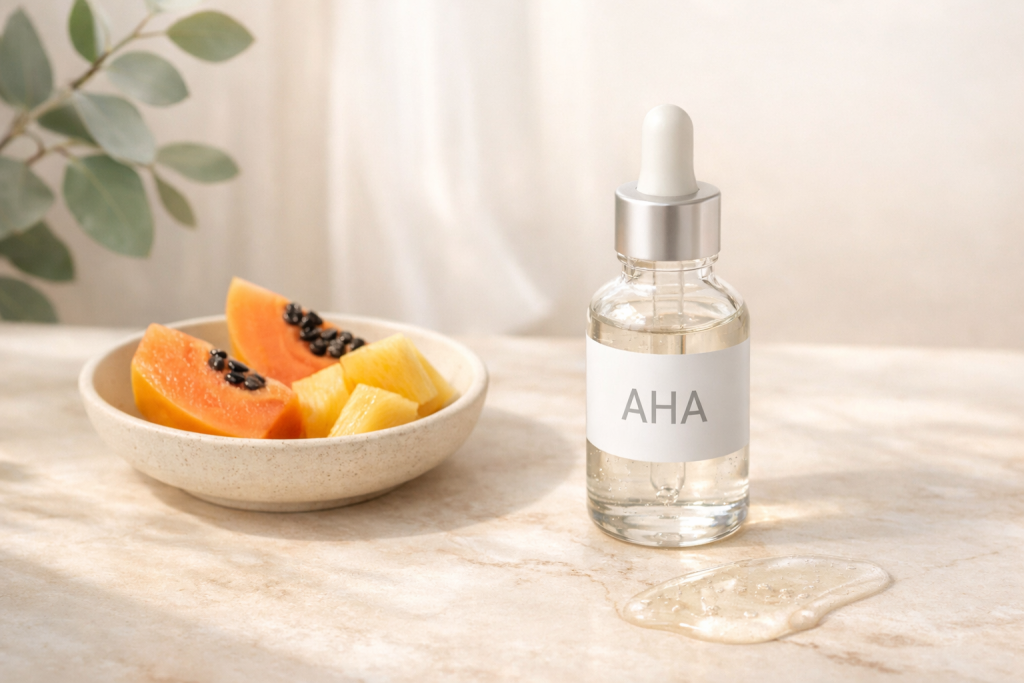
Chemical exfoliation uses acids or enzymes to dissolve the bonds that hold dead skin cells together. Common chemical exfoliants include:
- AHAs (alpha hydroxy acids like glycolic or lactic acid)
- BHAs (beta hydroxy acids like salicylic acid)
- PHAs (polyhydroxy acids)
- Fruit enzymes (papaya, pineapple)
Rather than scrubbing, these ingredients work by loosening and dissolving buildup on a cellular level.
Despite the word “chemical,” many exfoliating acids are derived from natural sources such as sugar cane, milk, or fruit.
Pros and Cons of Physical Exfoliation
Benefits
• Immediate smoothness
• Instant glow
• Simple and intuitive to use
• No waiting time
• Often budget-friendly
Many women love physical exfoliation because you can feel it working. There’s something satisfying about rinsing your face and noticing softness right away.
Potential Drawbacks
• Can be too abrasive if particles are rough
• Easy to overdo
• May create micro-tears if pressure is excessive
• Not ideal for inflamed or sensitive skin
The biggest risk with physical exfoliation is user error. Pressing too hard or using gritty scrubs with irregular edges (like crushed walnut shells) can damage the skin barrier.
If you choose this method, the texture matters. Look for rounded, finely milled particles and use light pressure.
Pros and Cons of Chemical Exfoliation
Benefits
• More even exfoliation
• Can target specific concerns (acne, hyperpigmentation, fine lines)
• No friction required
• Often gentler for sensitive skin when formulated properly
Chemical exfoliation is especially helpful for women experiencing hormonal breakouts, melasma, or texture changes due to aging.
For example:
- AHAs work beautifully for dry or sun-damaged skin.
- BHAs penetrate oil and are ideal for congested pores.
- PHAs are milder and excellent for sensitive skin.
Potential Drawbacks
• Overuse can thin the barrier
• May cause tingling or irritation
• Requires consistent sunscreen use
• Can be confusing to layer with other active ingredients
The most common mistake with chemical exfoliation is using it too frequently. More is not better.
How to Choose Based on Your Skin Type
Here’s where the physical vs chemical exfoliation decision becomes personal.
Dry or Mature Skin
As estrogen declines, skin naturally becomes thinner and drier. Gentle chemical exfoliation (like lactic acid or PHAs) can be incredibly beneficial because it exfoliates while supporting hydration.
Best choice: Mild AHA or PHA 1–2 times per week.
Avoid: Harsh scrubs that can emphasize dryness.
Oily or Acne-Prone Skin
Salicylic acid (a BHA) penetrates oil and helps unclog pores. It’s often more effective than scrubs for preventing breakouts.
Best choice: BHA 2–3 times per week.
Optional: Very gentle physical exfoliation occasionally, if skin is not inflamed.
Sensitive or Rosacea-Prone Skin
Friction can aggravate redness. PHAs or enzyme exfoliants are usually better tolerated.
Best choice: Low-strength PHA or enzyme exfoliant once weekly.
Always patch test first.
Normal or Combination Skin
You may benefit from alternating methods — but not in the same session.
Example:
- Chemical exfoliation one week
- Gentle physical exfoliation the next
The key is observing how your skin responds.
How Often Should You Exfoliate?
For most women 35+, less is more.
General guidelines:
- Sensitive skin: 1x per week
- Normal/combination: 1–2x per week
- Oily skin: 2–3x per week
- Dry skin: 1x per week
- Mature skin: 1-2x per week
Daily exfoliation is rarely necessary and often harmful.
If your skin feels tight, shiny (but not oily), reactive, or suddenly more breakout-prone, you may be over-exfoliating.
For more detailed guidance on maintaining your barrier, the American Academy of Dermatology offers helpful science-backed resources: https://www.aad.org/public/everyday-care/skin-care-basics
How to Exfoliate Safely
Regardless of which method you choose, follow these protective principles:
- Start Slowly – Introduce one exfoliating product at a time.
- Don’t Mix Too Many Actives – Avoid layering exfoliating acids with retinol in the same routine unless directed by a professional.
- Moisturize Immediately After – Support your barrier with nourishing ingredients like: – Hyaluronic acid – Ceramides – Aloe – Jojoba oil
- Always Wear Sunscreen – Exfoliation increases sun sensitivity. A mineral SPF is essential during the day.
- Listen to Your Skin – Redness that lingers, stinging, or peeling are signs to pause.
Can You Combine Physical and Chemical Exfoliation?
Yes — but thoughtfully.
This is called multi-modal exfoliation. However:
• Do not use both in the same session unless guided by a professional
• Space them several days apart
• Monitor for irritation
For many women, sticking with one well-chosen method is enough.
A Simple Weekly Exfoliation Ritual
Turn exfoliation into a mindful self-care moment rather than a rushed step.
- Cleanse gently
- Apply your chosen exfoliant
- Rinse (if needed)
- Follow with a hydrating serum
- Seal with a nourishing moisturizer
- Take three slow breaths
- Finish with gratitude for your skin
Skincare is not about perfection — it’s about partnership with your body.
FAQ: Physical vs Chemical Exfoliation
Is chemical exfoliation stronger than physical?
Not necessarily. Strength depends on formulation and frequency. A gentle enzyme can be milder than an aggressive scrub.
Can I exfoliate if I use retinol?
Yes, but reduce frequency and avoid using them on the same night unless your skin is highly tolerant.
What age should I start exfoliating?
Light exfoliation can begin in your 20s, but it becomes increasingly beneficial after 30 as cell turnover slows.
Why does my skin look worse after exfoliating?
You may be over-exfoliating or using a method not suited to your skin type.
Choosing with Confidence
When it comes to physical vs chemical exfoliation, there is no universal “best.” There is only what is best for your skin — right now.
Your skin changes with hormones, stress levels, seasons, sleep quality, and nourishment. So your exfoliation method may evolve too. What works beautifully in your forties may need adjusting in your fifties. What your skin tolerates in winter may feel different in summer.
The goal is never aggressive resurfacing. It’s thoughtful renewal.
Exfoliation is simply one supportive step within a much larger whole-body approach to healthy skin. When you zoom out, radiant skin isn’t created by one product or one technique — it’s influenced by hydration, nutrition, movement, stress balance, rest, and the ingredients you consistently apply.
If you’d like to see how exfoliation fits into a complete, balanced philosophy of skin health, I invite you to explore my guide on the 7 Pillars of Holistic Skincare. Inside, I share the foundational lifestyle and skincare principles that support lasting glow from the inside out.
Because true radiance isn’t about doing more.
It’s about doing what supports your skin — gently, consistently, and with awareness.
And that kind of care creates beauty that lasts.