

Why March Is When Skin Gets Confused
March is the month when many of us start searching for how to transition skincare from winter to spring—because suddenly, what worked a few weeks ago doesn’t feel right anymore. Your skin might still feel dry and tight in the mornings, but by afternoon you’re noticing extra shine, clogged pores, or little bumps that weren’t there in January. It’s not your imagination; seasonal shifts can make skin feel unpredictable, especially when you’re trying to keep your routine clean, gentle, and consistent.
That in-between feeling can be so frustrating. Winter moisturizers may start to feel heavy or greasy, but switching to lighter products too quickly can leave your skin feeling exposed, irritated, or even more dehydrated. And if you’ve ever tried to “fix” it by adding a handful of new products at once—or scrubbing and exfoliating more aggressively—you already know how easily spring skin can swing from dull to reactive.
The good news is that your skin doesn’t need a total overhaul. With a few thoughtful adjustments—based on how the skin barrier responds to changing temperature, humidity, and sun exposure—you can move into spring feeling balanced, comfortable, and clear. I’ve seen this transition happen year after year: the same seasonal concerns, the same confusion, and the same relief when women learn a simple, step-by-step way to adjust without overcorrecting.
In this post, I’ll walk you through exactly what to change (and what to keep) as the seasons shift, including the most common mistakes to avoid, spring-friendly ingredients to look for, and a gentle reset ritual you can use to bring your skin back into harmony.
Why Your Skin Changes Between Winter and Spring
If your skin feels different in March, it’s not random — it’s biological and environmental. Understanding why these changes happen makes it much easier to transition skincare from winter to spring without overreacting.
Seasonal shifts affect your skin barrier, oil production, hydration levels, and even sensitivity. When you recognize what your skin is responding to, the adjustments become gentle and intentional instead of reactive.
Humidity Shifts and Your Skin Barrier
During winter, cold air outside and indoor heating constantly pull moisture from the skin. In response, most of us layer richer creams, thicker oils, and more occlusive products to prevent dehydration and protect the barrier.
As early spring arrives, humidity levels begin to rise — even if only slightly. That subtle environmental change alters how much water your skin is able to retain on its own. If you continue using very heavy winter formulas without adjustment, skin can begin to feel congested, coated, or uneven.
At the same time, your barrier may still be recovering from months of dryness. So while the air feels lighter, your skin may not yet be fully resilient. This is why the transition period can feel confusing — the weather shifts before your skin completely does.
Oil Production Begins to Adjust
With warmer temperatures comes a natural increase in oil production. Even women who typically describe their skin as dry may notice more shine by midday or small breakouts appearing along the chin or jawline.
This doesn’t mean your skin has suddenly become oily. More often, it’s a combination of:
- Increased sebum production
- Dead skin buildup lingering from winter
- Heavier products mixing with natural oils
When this happens, pores can appear more noticeable and skin may lose some of its clarity. It’s not a crisis — it’s simply a signal that your routine may need refinement.
Increased Sun Exposure and Oxidative Stress
Even before summer officially arrives, UV exposure begins to increase in early spring. Longer daylight hours and more time outdoors expose skin to cumulative sun damage — often before we think to adjust our protection habits.
Sun exposure plays a significant role in visible aging, contributing to collagen breakdown, uneven tone, and loss of elasticity over time. If you’d like to explore this more deeply, this article on the impact of sun exposure on the aging process explains how UV radiation accelerates skin aging and why consistent protection matters year-round:
https://facialesthetics.org/the-impact-of-sun-exposure-on-the-aging-process/
Spring isn’t only about lightening your moisturizer — it’s also about strengthening antioxidant support and committing to daily SPF before summer habits fully set in.
Inflammation From Seasonal Stress
Seasonal allergies, fluctuating temperatures, wind, and environmental shifts can subtly increase inflammation in the skin. You may notice:
- Redness
- Patchy dryness
- Sensitivity around the nose and cheeks
- Skin that feels reactive to products that were fine all winter
If exfoliation was increased to combat winter dullness, irritation can become even more noticeable during this transition.
Spring skin thrives on balance — not extremes.
When you understand these internal and external changes, it becomes clear that your skin isn’t misbehaving — it’s adapting. Spring doesn’t require a complete reset — just a mindful recalibration. Let’s walk through the small changes that help your skin move gracefully from winter into the lighter months ahead.
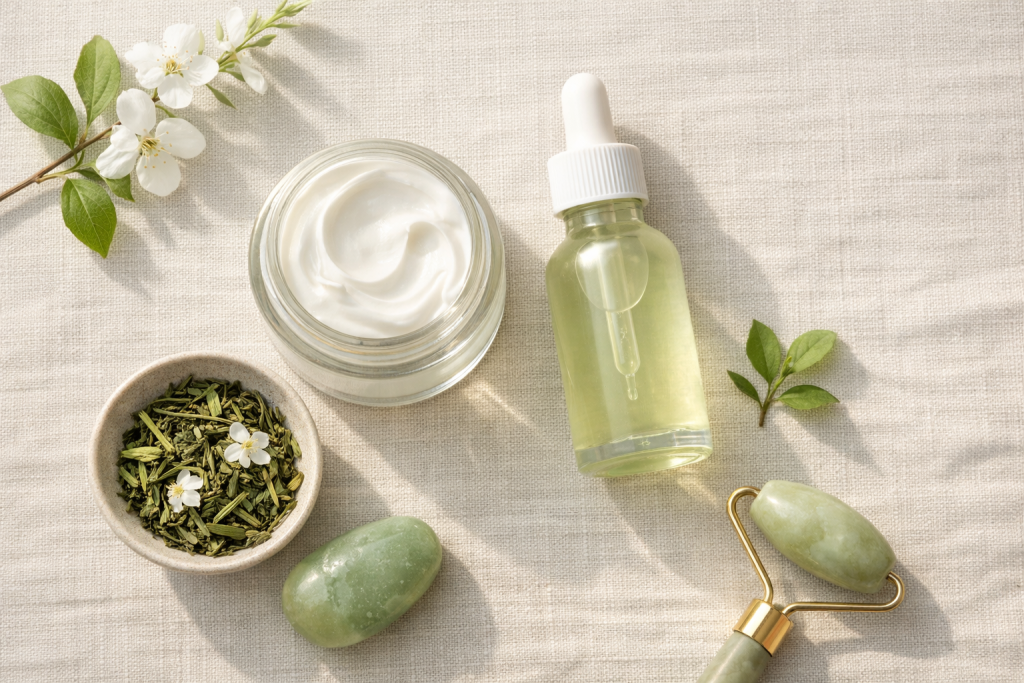
How to Transition Skincare from Winter to Spring Step by Step
When you transition skincare from winter to spring, the goal isn’t to replace everything at once. It’s to make small, intentional adjustments that support your skin barrier while responding to rising humidity, increased oil production, and stronger sun exposure.
Think refinement, not reinvention.
Step 1: Reassess Your Cleanser
Winter often calls for creamy, nourishing cleansers that protect against dryness. As temperatures rise, however, those same formulas can begin to feel heavy or leave behind residue.
If your skin feels slightly congested or looks dull, consider switching to:
- A gentle gel cleanser
- A light milky cleanser
- A formula that removes buildup without stripping
The key is balance. Your cleanser should leave your skin feeling clean and comfortable — never tight.
This small change alone can prevent the clogged pores that often show up in early spring.
(If you’d like to softly mention one of your cleansers here, this would be a natural placement.)
Step 2: Reintroduce Gentle Exfoliation
Winter can slow down natural cell turnover, leading to buildup that becomes more noticeable as sunlight increases. Spring is an ideal time to gently support renewal — but restraint is important.
Instead of harsh scrubs or strong acids, look for:
- Lactic acid (hydrating and mild)
- Fruit enzymes
- Very fine physical exfoliants used sparingly
For most mature or sensitive skin, 1–2 times per week is sufficient.
Over-exfoliating during seasonal transitions is one of the most common mistakes. Your goal is brightness and smoothness — not irritation.
Step 3: Lighten Moisture Without Removing It
One of the biggest myths about spring skincare is that you should stop moisturizing as soon as the air feels warmer.
In reality, your skin still needs hydration — it just may not need thick occlusives every day.
Consider:
- Switching from a heavy cream to a lighter moisturizer
- Using facial oils more selectively
- Layering hydrating serums under a breathable cream
Hydration keeps the barrier strong and resilient. Removing it too quickly can trigger rebound oil production and sensitivity.
Step 4: Increase Antioxidant Support
With increased UV exposure and environmental stress comes the need for stronger daily protection.
Spring is the perfect time to introduce or consistently use:
- Vitamin C
- Green tea extract
- Niacinamide
- Botanical antioxidants
These ingredients help neutralize free radicals, support collagen, and brighten uneven tone.
Antioxidants work beautifully alongside sunscreen — they don’t replace it, but they enhance your skin’s defense system.
Step 5: Commit to Daily SPF
If sunscreen slipped during winter, March is when it needs to become non-negotiable again.
Even on cloudy days, UVA rays penetrate and contribute to premature aging. Daily SPF protects:
- Collagen integrity
- Skin elasticity
- Pigmentation stability
- Overall tone and texture
Choose a formula that feels comfortable and blends easily into your routine. When sunscreen feels good on the skin, consistency becomes effortless.
Step 6: Introduce Changes Gradually
Perhaps the most important step when you transition skincare from winter to spring is pacing.
Avoid changing:
- Your cleanser
- Your exfoliator
- Your moisturizer
- And your serum
all at once.
Introduce one adjustment at a time and give your skin 1–2 weeks to respond before making another shift. This allows you to identify what’s helping — and prevents unnecessary irritation.
Spring skincare isn’t about doing more. It’s about aligning your routine with what your skin is already trying to do naturally.
Ingredient Spotlight: Barrier-Supporting Ingredients for Spring
As you transition skincare from winter to spring, ingredients matter just as much as texture. This isn’t the season for aggressive resurfacing or dramatic overhauls. It’s the season for supporting your skin barrier while encouraging renewal and protection.
These are some of the most supportive ingredients to look for during this seasonal shift — especially for mature, sensitive, or hormonally changing skin.
Hyaluronic Acid: Flexible Hydration
Hyaluronic acid is often misunderstood as simply a “hydrator,” but its real benefit lies in flexibility. It helps bind water to the skin, allowing it to stay plump and comfortable as humidity levels fluctuate.
In early spring, when the air begins to hold more moisture, hyaluronic acid helps your skin adapt without feeling heavy. It layers beautifully under lighter creams and supports barrier recovery after winter dryness.
Look for formulas that combine hyaluronic acid with soothing ingredients rather than high concentrations alone, which can sometimes feel tight in very dry climates.
Ceramides: Barrier Reinforcement
Ceramides are lipids that naturally exist in the skin barrier. After months of cold exposure and indoor heating, these lipids can become depleted.
Reintroducing ceramide-rich products in spring helps:
- Strengthen the skin barrier
- Reduce transepidermal water loss
- Calm sensitivity
- Improve resilience
If your skin feels reactive during seasonal changes, ceramides provide quiet, steady support.
Niacinamide: Balance and Brightness
Niacinamide is one of the most versatile spring ingredients. It helps regulate oil production while also improving tone and reducing the appearance of pores.
For women noticing breakouts along the chin or jawline as temperatures rise, niacinamide can help restore balance without stripping the skin.
It also supports collagen production and barrier function — making it especially valuable for skin over 35.
Green Tea Extract: Antioxidant Protection
With increasing sun exposure and environmental stress in spring, antioxidants become essential.
Green tea extract is rich in polyphenols that help neutralize free radicals and calm inflammation. It’s especially helpful if you experience seasonal redness or sensitivity.
Unlike stronger actives, green tea works quietly in the background — protecting and soothing without overwhelming the skin.
Jojoba Oil: Intelligent Moisture
Jojoba oil is technically a wax ester, and its structure closely resembles the skin’s natural sebum. This makes it uniquely adaptive.
In spring, when oil production begins shifting, jojoba oil can:
- Provide lightweight nourishment
- Help regulate sebum
- Support barrier repair without clogging pores
It’s an ideal bridge ingredient — not as heavy as winter oils, but still deeply supportive.
Spring ingredients should feel breathable, balancing, and restorative.
When you choose formulas built around barrier health rather than intensity, your skin transitions smoothly — without the cycle of overcorrecting and repairing.

A Simple Spring Skin Reset Ritual
Transitioning your skincare routine doesn’t have to feel clinical or complicated. In fact, one of the most powerful ways to transition skincare from winter to spring is through a simple, consistent evening ritual that supports renewal without overwhelming your skin.
This isn’t about adding more steps. It’s about being intentional with the ones you already have.
Here is a gentle spring reset ritual you can follow once or twice a week as the seasons shift.
Step 1: Begin with a Gentle, Thorough Cleanse
Start by removing the day completely — sunscreen, makeup, environmental buildup, and excess oil.
Massage your cleanser into damp skin for a full 60 seconds. This not only ensures proper cleansing but also stimulates circulation and encourages lymphatic flow.
Rinse with lukewarm water, not hot. Hot water can disrupt the barrier and increase sensitivity during seasonal transitions.
Pat your skin dry softly — never rub.
Step 2: Support Renewal with Mild Exfoliation
Choose a gentle exfoliant — lactic acid, fruit enzymes, or a very fine physical exfoliant — and use it no more than 1–2 times per week.
Apply with light pressure and allow it to work without scrubbing aggressively. Spring exfoliation should feel refreshing, not intense.
This step helps remove lingering winter buildup, allowing your skin to reflect light more evenly and absorb hydration more effectively.
If your skin feels sensitive that week, skip this step. Listening to your skin is part of the ritual.
You may also consider extending this seasonal reset beyond the face. As sleeves become shorter and more time is spent outdoors, gentle body exfoliation helps remove dry winter buildup and improve overall skin texture. A well-formulated body scrub can encourage smoother, more radiant skin without harsh abrasion.
If you’d like to explore options designed to polish and nourish at the same time, you can find them here:
https://www.beautybyfrancesca.com/collections/body-scrubs
Step 3: Layer Hydration Strategically
After exfoliation (or cleansing on non-exfoliation days), apply a hydrating serum to slightly damp skin. Ingredients like hyaluronic acid or niacinamide help restore balance and reinforce the barrier.
Press the product into your skin instead of rubbing. This simple shift encourages mindful application and reduces friction.
Follow with a lighter spring moisturizer — something breathable yet nourishing.
If you prefer facial oil, use a few drops pressed gently into the skin rather than massaging heavily.
Step 4: Add a Brief Facial Massage or Breathwork Moment
Spring is a season of transition and renewal — not just for your skin, but for your nervous system.
After applying your moisturizer, take one minute to:
- Gently massage along the jawline and cheekbones
- Use upward strokes along the neck
- Breathe deeply through your nose for five slow breaths
This encourages circulation, reduces facial tension, and anchors the ritual in calm rather than correction.
Skincare becomes more effective when your body is relaxed.
Step 5: Seal with Protection in the Morning
The ritual continues the next morning with antioxidant support and SPF.
Even if your skin feels balanced and calm, protection is what preserves that progress. Consistency here prevents the cycle of damage and repair that accelerates visible aging.
A spring reset ritual isn’t about dramatic change. It’s about thoughtful adjustment — lightening what feels heavy, reinforcing what feels vulnerable, and allowing your skin to move into the new season gradually.
When approached this way, the transition feels graceful instead of reactive.
Common Mistakes When Transitioning Skincare
When you transition skincare from winter to spring, it’s easy to overcorrect. The desire for brighter, lighter, clearer skin can lead to sudden changes that actually create more imbalance.
Awareness is powerful here. Avoiding these common mistakes can make the seasonal shift feel smooth instead of reactive.
Mistake #1: Changing Everything at Once
It’s tempting to swap out your cleanser, moisturizer, exfoliant, and serum all in the same week.
But when multiple products change at once, it becomes impossible to know what your skin is responding to — positively or negatively. Sudden shifts can also overwhelm a barrier that is still recovering from winter dryness.
Instead, introduce one adjustment at a time and give your skin space to respond. Patience protects progress.
Mistake #2: Over-Exfoliating for Faster Results
As natural light increases, dullness becomes more noticeable. Many women respond by exfoliating more frequently or using stronger formulas.
Unfortunately, aggressive exfoliation during a seasonal transition can:
- Weaken the skin barrier
- Increase redness
- Trigger sensitivity
- Cause rebound oil production
Spring exfoliation should feel supportive, not corrective. One to two times per week is often enough for mature or sensitive skin.
If you’re unsure which type of exfoliation is best for your skin type, I break down the differences between physical and chemical exfoliation — and how to choose safely — in this detailed guide that shows you how to exfoliate intentionally instead of reactively.
Mistake #3: Eliminating Moisturizer Too Quickly
Warmer air does not mean your skin suddenly stops needing hydration.
Removing moisturizer too early can disrupt barrier balance and lead to increased oil production or tightness. The solution isn’t to skip hydration — it’s to lighten the texture while maintaining support.
Breathable creams and balanced layering help your skin adjust naturally.
Mistake #4: Ignoring the Neck and Décolletage
As clothing becomes lighter in spring, the neck and chest receive more sun exposure. Yet these areas are often left out of exfoliation, antioxidant application, and SPF.
The skin on the neck and décolletage is thinner and often shows signs of aging earlier. Extending your spring adjustments downward ensures consistency and long-term skin health.
Mistake #5: Forgetting About Daily Sun Protection
One of the most common spring habits is underestimating UV exposure because temperatures still feel mild.
But UVA rays penetrate year-round and contribute to collagen breakdown and pigmentation changes long before summer arrives. Consistent SPF is not a summer habit — it’s a daily one.
Spring is simply when we tend to remember it again.
Seasonal transitions are less about dramatic correction and more about mindful refinement.
When you avoid these common mistakes, your skin doesn’t have to swing between extremes. It can move gradually, confidently, and comfortably into the new season.
FAQ: Transitioning Skincare from Winter to Spring
When you transition skincare from winter to spring, questions naturally come up. Seasonal changes can feel subtle at first — then suddenly noticeable. Below are answers to some of the most common concerns women experience this time of year.
When should I transition my skincare routine for spring?
There’s no exact calendar date. Instead of focusing on the month, pay attention to environmental and skin changes.
If you notice:
- Increased humidity
- Longer daylight hours
- More time spent outdoors
- Slight changes in oil production or congestion
it’s likely time to begin adjusting gradually.
For most climates, late February through early April is when this shift begins.
Why am I breaking out in March when I usually have dry skin?
This is very common.
As temperatures rise, oil production naturally increases. If you’re still using heavier winter moisturizers or haven’t exfoliated gently in several weeks, pores can become congested.
This doesn’t mean your skin has “changed types.” It simply means it’s adapting to seasonal conditions.
Often, small adjustments — like lightening texture and introducing mild exfoliation — restore balance quickly.
Do I still need a heavy moisturizer in spring?
In most cases, no — but you still need hydration.
Instead of eliminating moisturizer, transition to a lighter, breathable formula. Your skin barrier may still be recovering from winter dryness, so removing moisture entirely can lead to sensitivity or rebound oil production.
The goal is to lighten, not eliminate.
How often should I exfoliate during seasonal changes?
For most women over 35, 1–2 times per week is sufficient during the spring transition.
If your skin feels sensitive, irritated, or reactive, scale back immediately. Exfoliation should enhance clarity — never compromise comfort.
Consistency and moderation will always outperform intensity.
Can seasonal changes make my skin more sensitive?
Yes. Fluctuating temperatures, wind, allergens, and increased sun exposure can all contribute to mild inflammation.
This is why spring routines should prioritize:
- Barrier-supporting ingredients
- Antioxidant protection
- Gentle cleansing
- Gradual product adjustments
If sensitivity increases, simplify rather than add more.
Is sunscreen really necessary in early spring?
Absolutely.
UVA rays, which contribute to premature aging and collagen breakdown, are present year-round — even on cloudy or mild days.
Spring is often when we resume outdoor activities, making daily SPF especially important to protect the progress you’ve made through winter.
Seasonal transitions don’t have to feel confusing. When you understand what your skin is responding to and adjust with intention, the process becomes much more predictable — and far less stressful.
A Mindful Moment: Let Your Skin Transition Gently
Spring is a season of renewal, but renewal doesn’t require urgency.
In nature, transitions happen gradually. Light lingers a little longer each evening. The air softens slowly. Growth begins beneath the surface before it’s ever visible. Your skin follows a similar rhythm.
When you transition skincare from winter to spring, resist the temptation to rush the process. You don’t need to force brightness, scrub away dullness, or overhaul your routine overnight. Your skin is already adjusting — your role is simply to support it.
This season, consider approaching your skincare routine as a moment of observation rather than correction.
Notice:
- Where your skin feels balanced
- Where it feels congested
- Where it feels dry or reactive
Then respond gently.
Even taking one minute each evening to massage in your moisturizer, breathe deeply, and slow your thoughts can shift your nervous system out of stress mode. And when the body is calmer, the skin often follows.
Skincare works best when it’s rooted in consistency, not intensity.
Transition with Intention
Learning how to transition skincare from winter to spring isn’t about chasing trends or replacing everything on your shelf. It’s about refinement.
Lighten textures where needed. Support your barrier consistently. Reintroduce gentle exfoliation with care. Strengthen antioxidant protection. Commit to daily SPF.
Small shifts create lasting balance.
And remember — seasonal changes are normal. Breakouts in March, temporary dullness, or fluctuating hydration levels don’t mean your skin is failing. They simply mean it’s responding to its environment.
If you’re unsure where to begin, start small. Adjust one step in your routine this week and give your skin time to respond. Consistency and patience will always serve you better than dramatic change. With the right balance of gentle exfoliation, supportive hydration, and daily protection, your skin can move into spring feeling steady and strong.